
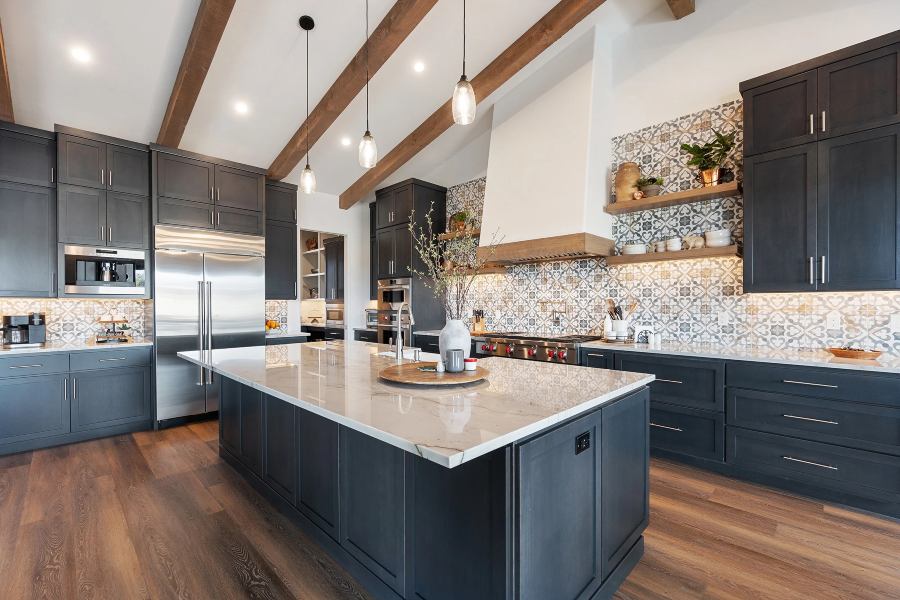
Choosing stain resistant solid surface countertops requires more than finding an attractive color or finish. Countertops are exposed to food, beverages, oils, cosmetics, water, and cleaning products every day, particularly in kitchens, bathrooms, hospitality spaces, offices, and other high-use environments. Because these substances can affect the appearance of a surface over time, stain resistance is an important performance characteristic to consider during material selection.
A countertop should also be evaluated according to its porosity, durability, maintenance requirements, design flexibility, installation needs, and intended application. Hyundai L&C provides product information that can help homeowners, designers, and contractors consider these factors together and better understand how a surface may perform in an everyday environment.
What Makes a Countertop Stain Resistant?
Stain resistance depends partly on how well a surface limits liquid absorption. Nonporous materials can help reduce penetration from common spills such as coffee, oils, sauces, and cosmetics.
Hanex Solid Surface is a nonporous acrylic material with stain-resistant properties, making it suitable for kitchens, bathrooms, workspaces, and other high-use areas. Its fabrication flexibility also supports various residential and commercial applications.
When comparing countertop materials, several characteristics deserve attention:
- Porosity
- Stain resistance
- Durability
- Maintenance
- Design flexibility
- Repairability
Why Nonporosity Matters in Everyday Spaces
The value of a nonporous countertop becomes particularly apparent in areas where spills and moisture are part of normal use. Kitchen counters may encounter water, cooking oils, sauces, and beverages, while bathroom vanities can be exposed to cosmetics, toothpaste, soap, and personal-care products.
When a surface limits absorption, many everyday spills can remain closer to the surface rather than penetrating deeply into the material. This can make routine cleaning more manageable and help preserve a consistent appearance.
Nonporosity can also be relevant in environments where cleanliness is a priority. Countertops in kitchens, bathrooms, healthcare settings, hospitality spaces, and commercial facilities may require frequent cleaning, making the surface’s maintenance characteristics an important part of material selection.
However, nonporosity should not be interpreted as meaning that a countertop never needs cleaning. Regular maintenance remains necessary to remove residues and preserve the appearance of the surface.
Choosing Solid Surface Countertops for Busy Areas
Countertop requirements vary considerably depending on the application. A lightly used bathroom vanity may experience very different conditions from a large kitchen island, restaurant counter, reception desk, or commercial workspace. Before selecting a surface, consider how the countertop will be used throughout a typical day.
Consider these factors when choosing a solid surface countertop:
- Common substances: Food, beverages, oils, cosmetics, cleaning products, and moisture
- Cleaning frequency: Daily cleaning and routine maintenance requirements
- Appearance: Color, pattern, finish, edge profile, seams, and dimensions
- Surface damage: Repairability and restoration options
- Material specifications: Manufacturer recommendations, care instructions, and intended applications
- Project requirements: Residential or commercial use, fabrication needs, and installation conditions
Hanex Solid Surface is designed for residential and commercial applications and provides fabrication flexibility for different project requirements. Hyundai L&C also provides product information covering material characteristics, applications, care, and professional resources to help buyers evaluate whether a solid surface meets the requirements of a particular project.
Stain Resistance Does Not Mean Stain Proof
One of the most important distinctions for countertop buyers is the difference between stain resistance and complete immunity to staining. A stain-resistant surface is designed to resist discoloration, but proper care is still necessary.
Leaving spills on a countertop for extended periods can create unnecessary cleaning challenges. Substances may dry, become more difficult to remove, or interact with residue already present on the surface.
Cleaning methods can also affect long-term appearance. Abrasive products, unsuitable chemicals, or aggressive cleaning tools may damage or alter a finish even when the underlying material has strong stain-resistant properties.
For that reason, manufacturer care instructions should always guide routine maintenance. Product-specific recommendations are more useful than assuming every countertop material can be cleaned in exactly the same way.
How to Maintain a Stain Resistant Countertop
Simple, consistent care can help keep a countertop looking clean and well maintained.
- Wipe up spills promptly.
- Use recommended cleaning products.
- Choose soft, non-abrasive cleaning materials.
- Avoid harsh or unapproved chemicals.
- Follow the manufacturer’s care instructions.
- Use recommended methods for removing stubborn marks.
- Contact a qualified fabricator for repairs when needed.
Regular care is especially important in busy kitchens, bathrooms, and commercial spaces where countertops receive frequent use.
Consider Durability Alongside Stain Resistance
Stain resistance is only one part of countertop performance. Depending on the installation, buyers may also need to consider resistance to scratches, heat, moisture, impact, and repeated cleaning.
For example, a kitchen countertop may encounter hot cookware, sharp utensils, food preparation, and frequent spills. A bathroom vanity may have greater exposure to moisture and personal-care products. A commercial countertop may face constant contact with equipment, merchandise, or cleaning products.
This is why countertop selection should begin with the intended application rather than appearance alone. A surface that performs appropriately for one environment may not necessarily provide the same advantages for another.
Understanding the limitations of a material is equally important. Manufacturer specifications can help clarify appropriate uses, recommended care, fabrication requirements, and other conditions that may affect performance.
Design Flexibility Can Add Practical Value
Solid surface countertops offer flexibility in both design and fabrication, making it easier to match different residential and commercial spaces.
Key design considerations include:
- Colors and patterns
- Surface finishes
- Edge profiles
- Custom dimensions
- Seams and integrated features
- Coordination with cabinets, flooring, and fixtures
For the most accurate selection, review physical samples and product information before installation. Seeing a sample in the actual space can make it easier to evaluate how the color and finish look under different lighting conditions.
Review Manufacturer Resources Before Installation
Reviewing manufacturer information before installation can help buyers understand how a countertop is designed to perform and how it should be maintained.
Key resources to review include:
- Technical specifications
- Care and maintenance instructions
- Warranty information
- Fabrication and installation guidelines
- Product samples
These details can help homeowners, designers, and contractors compare materials, confirm project requirements, and plan for long-term care before fabrication begins.
Make a More Informed Countertop Selection
A countertop needs to perform in the conditions where it will actually be used. Stain resistant solid surface countertops can provide practical advantages in spaces where spills, moisture, frequent cleaning, and everyday activity are expected, but stain resistance should be considered as part of a broader material evaluation.
Before choosing a countertop, review its porosity, durability, maintenance requirements, design options, repair considerations, installation specifications, and intended applications. Manufacturer documentation can provide the product-specific information needed to make a more informed comparison.
For additional information about Hanex Solid Surface, countertop applications, product characteristics, and care resources, Hyundai L&C offers materials that can support the research and planning process. Careful evaluation before installation can help ensure the selected countertop is not only visually appropriate, but also suited to the practical demands of everyday use.